

An edge AI inspection platform for mid-size discrete manufacturers running multi-variant production lines. Works on Cognex, Keyence, Basler, and Zebra camera hardware you already own. No dedicated vision engineering team required to manage changeovers.
Eolvision is not a general-purpose AI inspection tool repurposed for manufacturing. Every feature addresses a specific failure mode that mid-size manufacturers encounter when running rule-based vision across multi-variant production lines. The failure modes are well-documented: rule-based systems require full revalidation when tooling changes, material suppliers switch, or line conditions drift outside calibrated thresholds. The result is engineering time billed against every changeover, elevated escape risk during revalidation periods, and inspection infrastructure that cannot be shared across product families without a dedicated vision engineering team to maintain it. Here is what the platform does and how each piece fits together to eliminate that revalidation burden.
Facilities running 8–25 product variants on the same line cannot rely on a single generic inspection model. A model trained on the average of all variants generates excessive false positives on simpler part geometries and misses defects on complex ones. The reject rate climbs in both directions — unnecessary holds on good parts, escapes on bad ones — and neither problem is visible until it shows up in customer returns or rework counts.
Eolvision maintains a separate trained inspection model for each variant in the product library, stored on the edge compute module at the inspection station. When the MES or barcode scanner at line entry identifies the incoming part type, Eolvision activates the corresponding model before the part reaches the camera. Changeovers between variants add zero engineering time once the variant model exists in the library. The first deployment for a new variant requires labeled training images; after that, the switch is automatic.
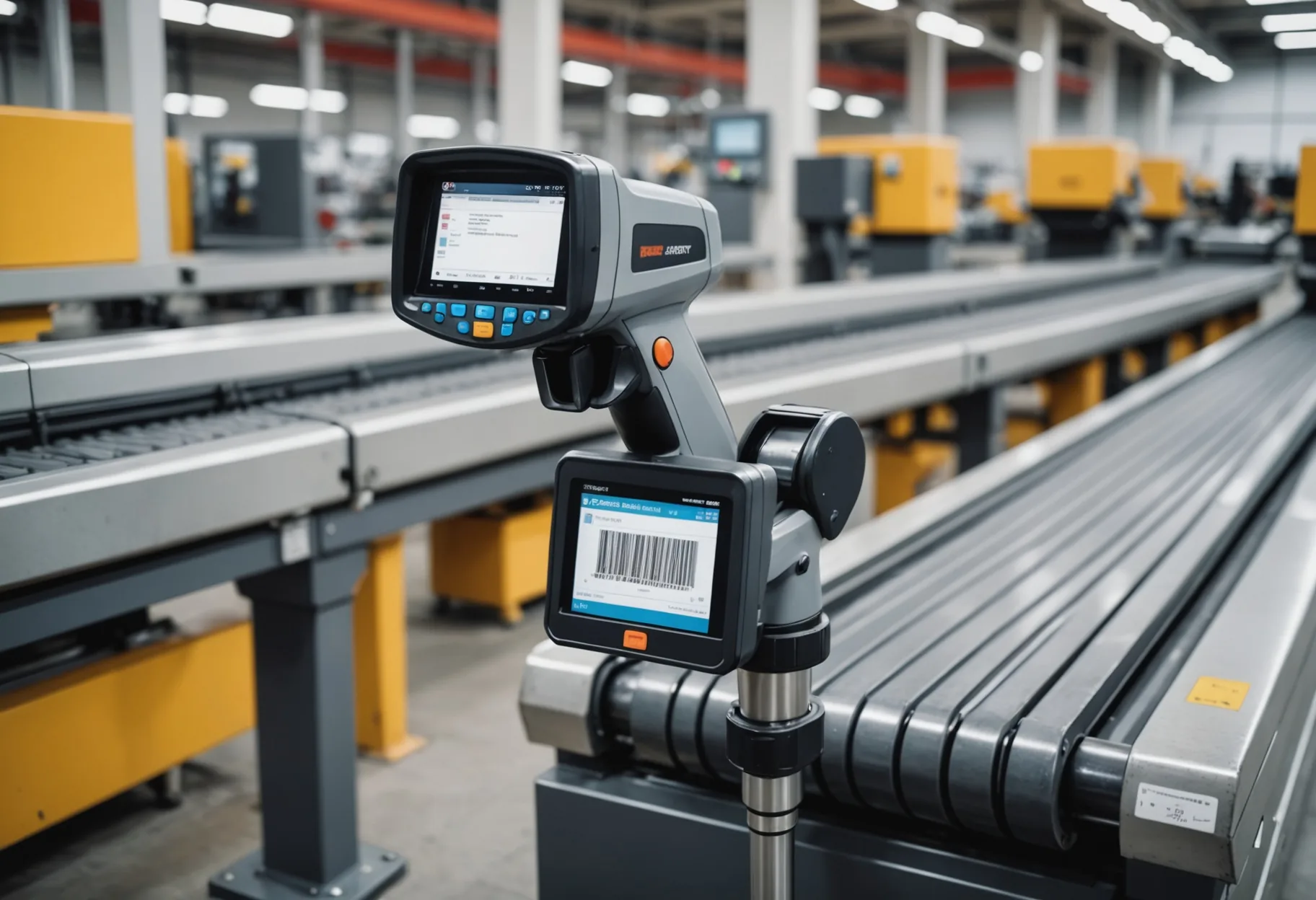
Rule-based inspection systems require full engineering revalidation when tooling wear, material batch variation, or a new supplier shifts the defect appearance outside the calibrated thresholds. The line shuts down or runs at elevated escape risk while an engineer manually adjusts rejection bounds. That event costs $12,000–$60,000 per line in engineering time alone, and it happens every time the production environment changes in a way the rules did not anticipate.
Eolvision detects when incoming images fall statistically outside the current model’s training distribution — a reliable signal that the model is uncertain about what it is seeing — and routes those images to an active learning queue in the quality engineer’s browser dashboard instead of forcing a pass/fail call it cannot make confidently. The quality engineer reviews the flagged images, labels each as defect or pass, and approves the batch. Eolvision retrains incrementally on the new labels and deploys the updated model to the edge module during the next scheduled 4-hour maintenance window. No production downtime. No full revalidation cycle.

Many mid-size manufacturers have existing Cognex In-Sight or Keyence IV2 smart cameras running rule-based presence checks and gross dimensional inspection. Replacing that hardware to add AI defect detection means capital expenditure, installation downtime, and recertification of the inspection station — a barrier that makes AI upgrades impractical for most quality budgets outside of a major line overhaul.
Eolvision installs as an AI inference layer that receives the raw image feed from existing Cognex In-Sight and Keyence IV2 cameras via their SDK interfaces, running defect detection in parallel with the current rule-based checks without modifying the Cognex or Keyence system configuration. The existing rule-based coverage stays in place. Surface defect and fine assembly defect detection runs at the same camera position on the same hardware. There is no second inspection station and no change to the existing camera wiring or PLC connection.
Some facilities have deployed Zebra Technologies FXR90 fixed RFID and camera readers as a combined tracking and inspection layer, or have started building inspection models with Landing AI LandingLens. Both represent investments in labeled inspection data and deployed hardware infrastructure. Switching to a new inspection platform should not require discarding that work.
Eolvision accepts LandingLens model export files as a starting model for further fine-tuning and active learning refinement. Facilities that have already labeled a LandingLens dataset can import that model directly into Eolvision rather than starting labeling from zero. For lines equipped with Zebra FXR90 readers, Eolvision reads the camera trigger and image output from the Zebra integration layer, enabling AI defect detection without replacing the Zebra tracking infrastructure or duplicating hardware at the inspection station.
A pass/fail output to the PLC is the minimum requirement for running a line. But it answers only one question: accept or reject this part. It does not tell the quality engineer where the defect was located, what defect type it was, how confident the inspection system was, or which product variant was on the line at the time. That information is what quality engineers need when they investigate an escape, analyze a rework spike, or respond to a warranty claim referencing a specific production window.
Eolvision stores the full defect annotation for every inspected part: bounding box coordinates, defect class label, confidence score, product variant, and timestamp — written to the quality traceability database at inspection time. The data is exportable for integration with SAP QM or other quality management systems and is available immediately for field return investigation without requiring manual record reconstruction. Traceability is included in the base platform, not a paid reporting add-on.
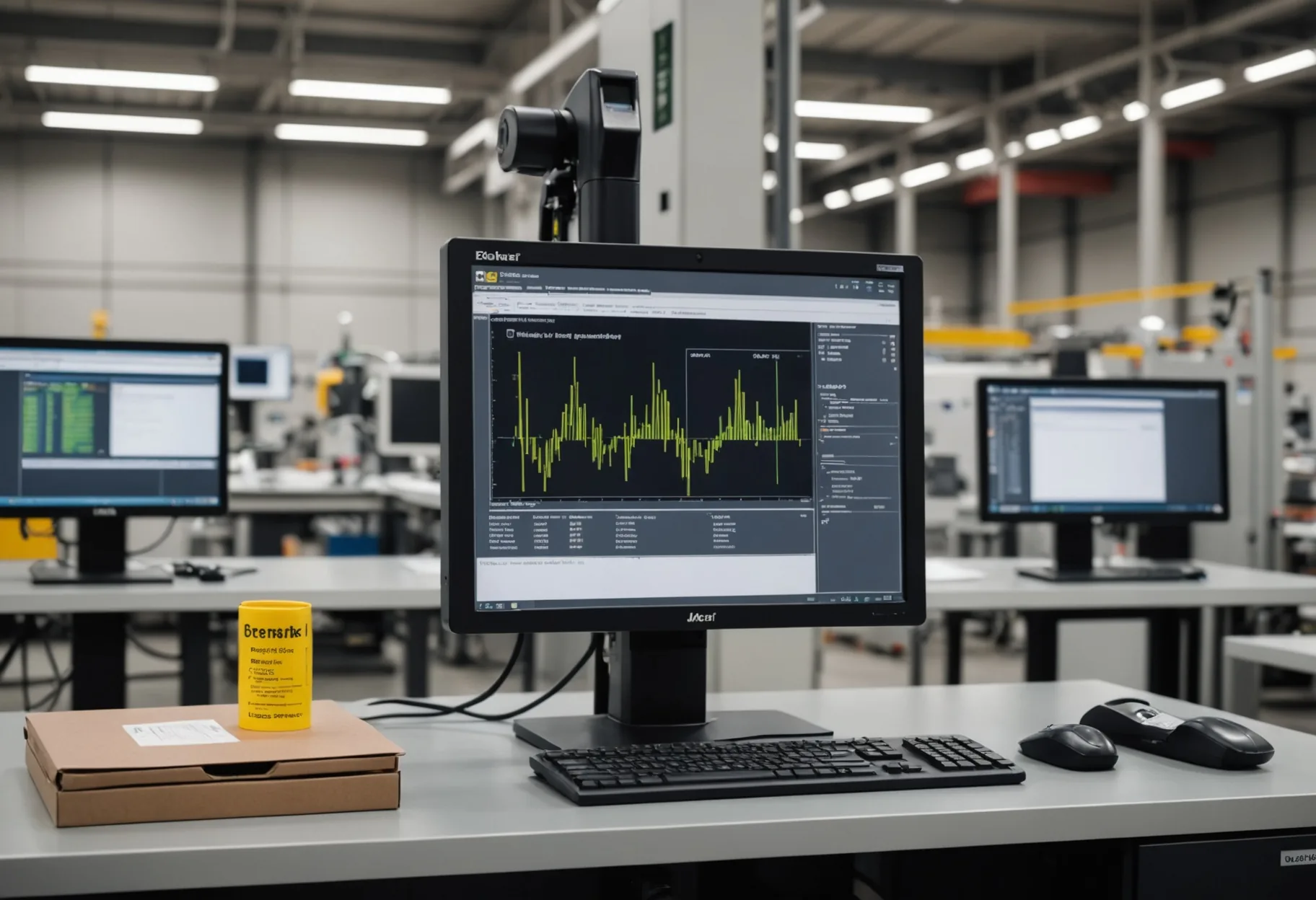
Manufacturers in industrial electronics, defense subassembly, and precision fabrication who have built inspection stations on National Instruments FlexRIO or NI Vision acquisition hardware often work with image types that consumer-focused AI platforms were not designed for: multispectral imaging for coating and material inspection, line-scan for continuous web or rod inspection, and high-frame-rate capture for fast conveyor applications. Generic AI models trained on standard RGB images do not transfer reliably to those input types.
Eolvision provides an NI Vision acquisition driver that handles frame buffering and GPU offload for the inference pass on NI-captured image streams. The driver supports multispectral, line-scan, and high-frame-rate image types natively, without requiring custom preprocessing pipelines to convert NI output into a format the inference engine can consume. Quality engineers at NI-equipped facilities get the same active learning retraining workflow as facilities running standard RGB cameras — the image acquisition hardware difference is handled at the driver layer.
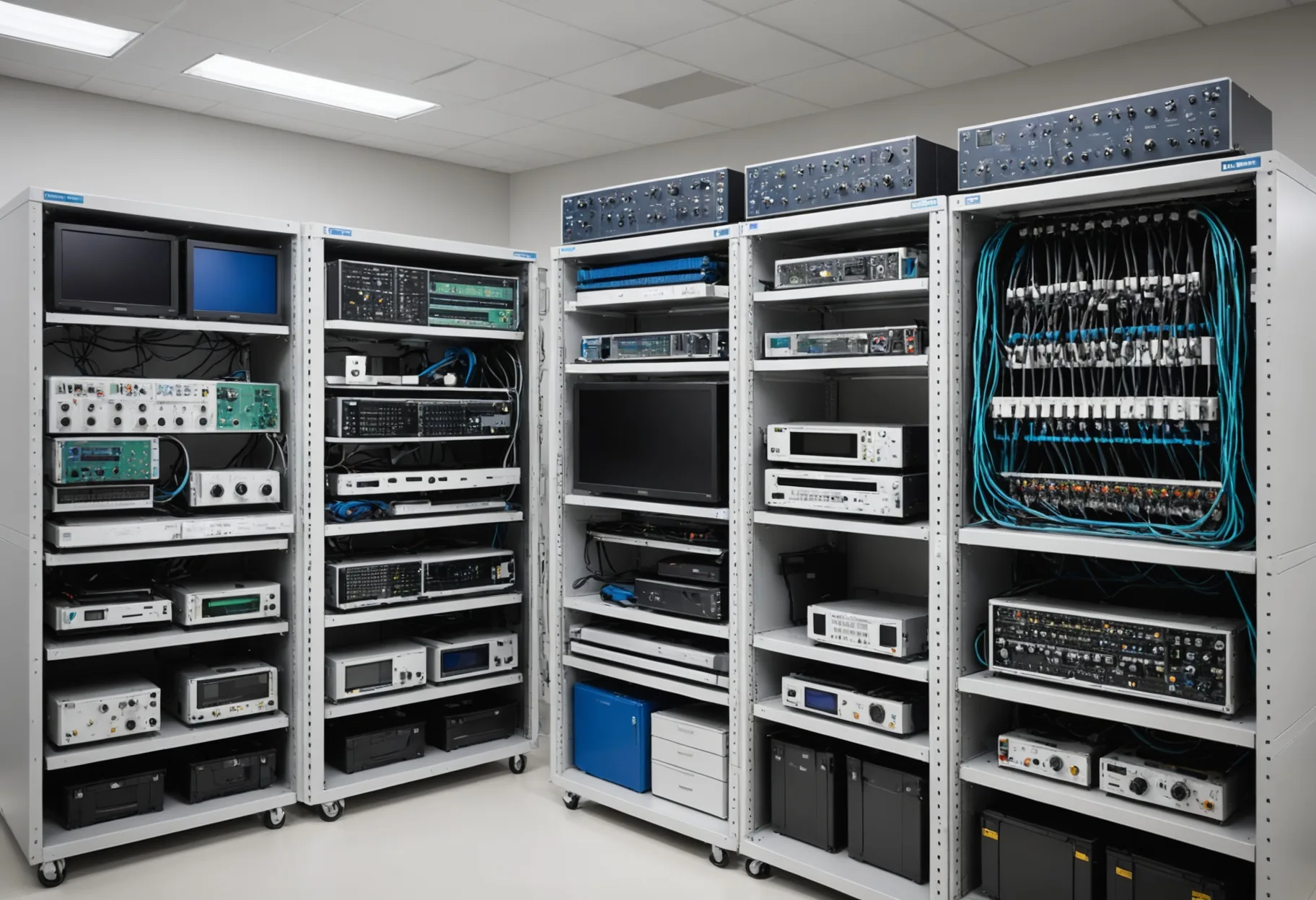
Eolvision is designed for mid-size discrete industrial manufacturers running 2 to 15 production lines with 8 or more product variants per line. These facilities typically generate 1,000 to 50,000 parts per shift, operate at $15M to $200M in annual revenue, and have 1 to 3 quality engineers responsible for end-of-line inspection across multiple product families.
The platform fits lines where product changeover frequency makes full vision system revalidation a material cost — typically facilities with 6 or more annual tooling changes or material supplier switches per line, or with 8 or more active product variants requiring separate inspection logic.
Eolvision is not designed for high-volume single-variant commodity production where stable inspection populations are handled adequately by rule-based vision. It is also not suited for food and pharmaceutical inspection where regulatory validation requirements mandate a different approach, or for Tier-1 automotive suppliers with dedicated in-house vision engineering teams.
Tell us what cameras you are running, how many product variants your line sees per year, and how often changeovers require engineering time. We will show you exactly what the integration looks like for your setup.