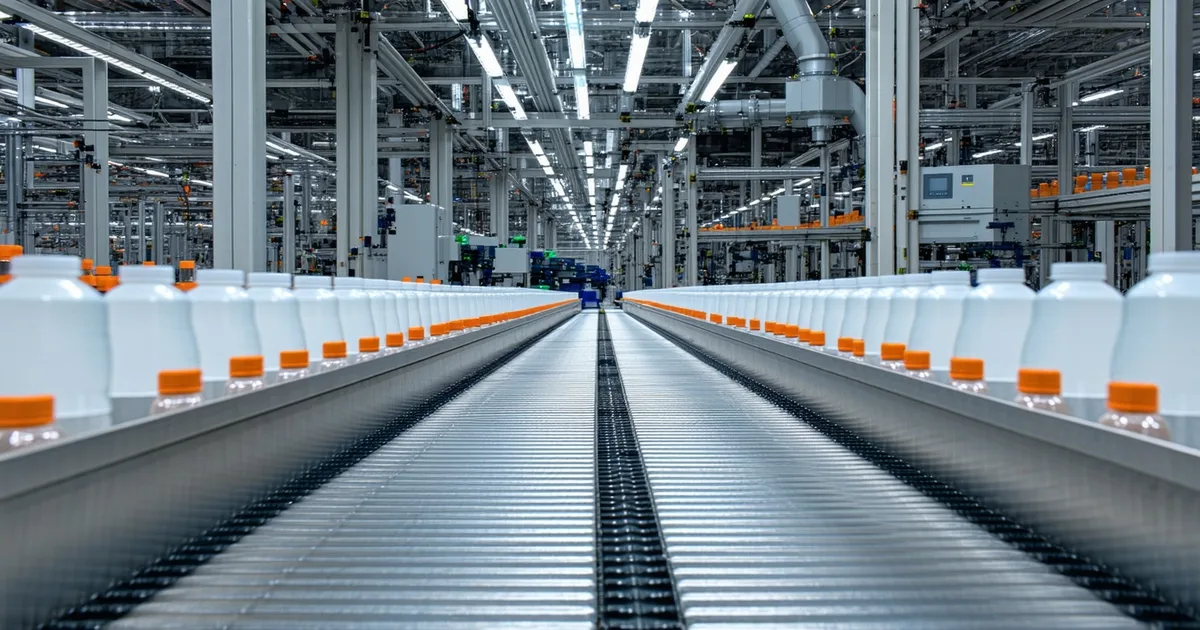
A 2% false reject rate on a line running 800 units per minute is 16 good units rejected every minute. Over a 16-hour production day, that is 15,360 good units that went through packaging, labeling, and conveyor transport only to be rejected, reprocessed, or scrapped. At $0.22 unit cost for a bottled consumer product, that is $3,379 of product loss per day from false rejects alone — not counting the labor and line interruptions that go with it.
Why False Reject Rate Is a First-Class Metric
Plant quality teams spend most of their inspection system attention on escape rate — the percentage of defective units that pass inspection and reach customers. That makes sense. A consumer products recall is expensive and damaging in a way that false rejects are not. But treating false rejects as an acceptable nuisance is wrong, for reasons beyond the direct product cost.
High false reject rates degrade inspection system credibility on the production floor. When operators see the inspection system rejecting units that look obviously acceptable, they start overriding reject calls, bypassing the divert gate, or reducing inspection sensitivity at the line control panel to "fix" the problem themselves. The result is an inspection system that the line operators do not trust and that the QC team cannot rely on for actual defect detection.
False rejects also consume quality engineer time. On a line with a 2% false reject rate, the reject divert bin fills with good product that someone must inspect and disposition. If your false rejects require manual re-inspection before rework or reintroduction to line, the labor cost doubles the production loss — now you have lost the product cost and the inspection labor cost for units that should never have been rejected in the first place.
The target for a well-tuned packaging line inspection system is false reject rate below 0.3% with escape rate below 0.01%. Both numbers are achievable simultaneously — but getting there requires understanding the specific failure modes that generate false rejects on CPG packaging lines.
The Three Most Common Sources of False Rejects on Packaging Lines
1. Label surface variation within acceptable limits. Consumer product labels are printed on flexible substrates — paper, polypropylene, polyethylene. They have inherent variation in print density, color registration, and surface gloss from one print run to the next. A vision model trained exclusively on one print batch will over-reject labels from a subsequent batch with slightly different print characteristics, even when both batches are within specification.
This is the most common false reject source at CPG plants transitioning from one label supplier or print stock to another. The model's label-presence and barcode-legibility classifiers were calibrated on the old substrate, and the new substrate's glossier finish changes the specular reflection pattern enough to score as a marginal label misalignment. The fix is retraining with a mixed batch — images from both print runs — before transitioning to the new label stock.
2. Fill level variation at the boundary of the acceptance window. Fill level inspection on bottles or cans uses a calibrated measurement zone: the fill line should fall within a defined pixel band on a calibrated camera image. A bottle that is filled to the low end of the specification window — say, 98% of target fill volume — is still an acceptable product. If the inspection system's fill level acceptance band was calibrated at nominal fill (100%) with a narrow tolerance, the low-fill acceptable bottles will score as rejects.
Calibration against the full specification range, not nominal, is the correction. Measure 50 bottles at the specification minimum fill, 50 at specification maximum, and 50 at nominal. Set the acceptance band to pass all three populations. The fill level acceptance window should track the product specification, not the process average.
3. Camera vibration or conveyor jitter on high-speed lines. At 800 units per minute, the time between frames is 75ms. If conveyor vibration causes a 2mm position shift between the trigger signal and the actual image capture, the inspection image is laterally shifted relative to the expected label zone. A label that is correctly placed on the product appears offset in the image. The classifier sees an apparent misalignment and rejects the unit.
Diagnosing vibration-induced false rejects requires logging the image capture timestamps against the conveyor encoder position. If your false rejects cluster at specific conveyor positions — near a belt join, near a motor mounting point, near a filling nozzle — vibration is the likely cause. The fix is mechanical isolation of the camera mount plus tightening the trigger timing to minimize the encoder-to-capture delay. The Eolvision hardware page covers camera mounting configurations for high-speed conveyor environments.
Threshold Tuning: The Precision-Recall Tradeoff on Packaging Lines
Every vision inspection classifier has a confidence threshold: the minimum classifier score required to issue a pass verdict. Raising the threshold tightens acceptance — more borderline units are rejected, escape rate goes down, false reject rate goes up. Lowering the threshold relaxes acceptance — more borderline units pass, false reject rate goes down, escape rate goes up.
Finding the operating point that hits your false reject target without exceeding your escape target requires a calibration dataset that represents your actual borderline population — units near the boundary of acceptable and unacceptable. Generic training data, or training data collected only from production defects (never from borderline acceptable units), produces a model that performs well in the middle of the distribution and poorly at the boundaries.
A consumer goods packaging line in the Southeast running 600 units per minute — filling 750ml PET bottles with a personal care product — came to us with a 1.8% false reject rate on label presence detection. Their model had been trained on clearly good and clearly bad labels, with nothing in the "marginal acceptable" category. The classifier scored marginal labels in the high-50% to mid-60% confidence range, which fell below their 70% pass threshold.
The fix involved three steps: collecting 300 images of borderline-but-acceptable labels from a 2-hour production run (physically inspected and approved by QC), adding them to the training set as positive (pass) examples, and retraining the classifier. Post-retraining, the marginal acceptable labels scored in the 75–82% confidence range — above the 70% threshold. False reject rate on the same production run dropped from 1.8% to 0.4% with no change in escape rate. The 300-image collection and retraining took one production shift to complete.
Class-Specific Thresholds vs. Single Global Threshold
Most packaging line inspection systems run a single confidence threshold across all defect classes. That works adequately when your defect catalogue is narrow (label presence/absence only) and defect class severity is uniform. When you are inspecting multiple defect types of different severity levels, a single threshold forces a poor tradeoff.
Consider a line inspecting for: (A) label absence — major defect, potential recall risk; (B) label misalignment >3mm — major defect, consumer complaint risk; (C) label misalignment 1–3mm — minor defect, cosmetic only; (D) cap skew under 5° — cosmetic only. These four defect classes warrant different operating thresholds. Label absence should have the highest sensitivity — set the threshold low, accept higher false rejects on borderline cases, prioritize escape prevention. Cap skew under 5° can have a relaxed threshold — customer complaints on minor cap cosmetics are rare and the rework cost is low.
Class-specific thresholds require your inspection system to support per-class threshold configuration, not just a single global score cutoff. This is standard in industrial vision platforms designed for CPG. If your current system applies one threshold to all defect classes, that is a likely source of your false reject overage on the low-severity classes and possible under-sensitivity on the high-severity classes.
Monitoring and Drift: Why False Reject Rate Changes Over Time
We're not saying that tuning your thresholds once fixes the problem permanently. It does not. Three things change over time that shift your operating point without any deliberate configuration change:
- Label artwork updates: Even a minor refresh to a product's label design — new regulatory text, updated barcode format — changes the visual input to the classifier. Plan for a retraining cycle after every label revision, even if the change appears minor.
- Lighting aging: LED ring lights lose roughly 15–20% luminous output over 5,000–8,000 hours of operation. As the light dims, image contrast decreases, and classifier confidence scores for borderline units drop. If you do not track mean confidence score over time, you will not see the drift until your false reject rate has already climbed.
- Seasonal product variation: Food and beverage products have viscosity, density, and fill characteristic changes with temperature. A fill level calibrated in summer at 22°C may be mis-calibrated in winter at 18°C ambient if the product fill volume is temperature-dependent.
The operational practice that catches these drifts before they become problems: log mean classifier confidence score per defect class by shift, and alert when the 7-day moving average drops below a threshold. Confidence score drift is an early warning sign — false reject rate change follows it by 1–3 weeks.
For CPG-specific inspection station configurations and throughput specifications for lines running 200–1,200 units per minute, see the packaged goods inspection page. Use the ROI calculator to estimate the production cost impact of your current false reject rate — that number is often larger than plant managers expect before running it.